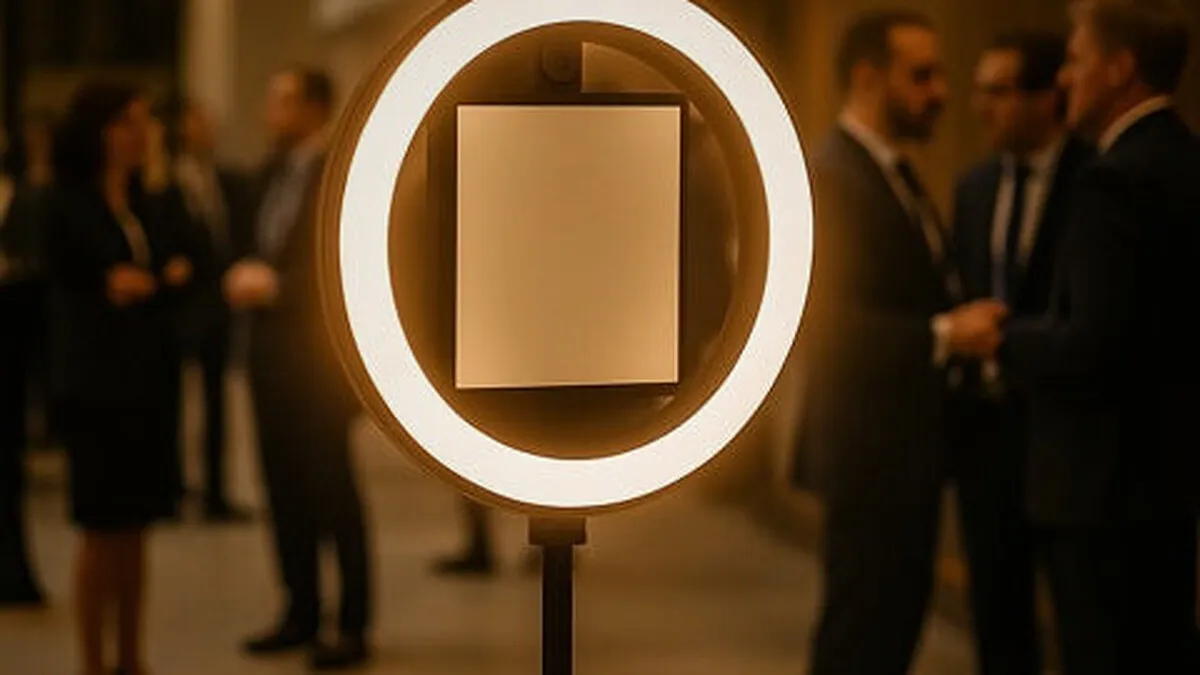
A corporate event photo booth is a booth hired by a company or its agency for a staff party, a conference, a product launch or a trade show stand, where every photo carries the brand. A brand activation photo booth is the same job with a sharper goal: attention at the stand, contacts collected with consent and numbers to report afterwards. The machine is what you already own. What the client buys is the branding around it and the report that comes after.
What the Client Is Actually Buying
A couple books a booth for the memories. A marketing manager books one because they have to justify the spend to someone above them. That changes the sale.
The booth is a way to get the logo onto content people share willingly, and to slow people down long enough for the sales team to start a conversation. If you pitch it as fun, you are competing with every entertainment supplier. If you pitch it as a small media channel with a report attached, you are competing with print ads and stand giveaways, and you usually win that comparison.
Two kinds of client book this work. Companies hire directly for internal events, staff parties and conferences. Agencies hire for activations they run on behalf of a brand, and they care most about one thing: that you will not embarrass them in front of their client.
Branding: Template, Overlay and Everything Around It
Corporate clients notice every pixel. The branding lives in more places than a wedding job:
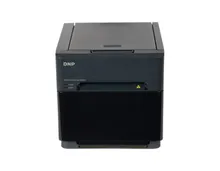
- The print template. Logo, colors and often a campaign line or a hashtag. On a 2x6 strip there is little space, so the logo has to stay legible at print size, which a 4x6 layout makes easier.
- The digital overlay. Every GIF, boomerang and video carries a frame or a watermark, because the shared file travels further than the print.
- The screens. Start screen, countdown, sharing page and the gallery itself in the client’s colors.
- The physical booth. A vinyl wrap, a branded backdrop or a printed floor graphic around the platform.
Ask for vector logos and brand guidelines at the first call, build the layouts and send proofs for written approval. Never improvise a brand color from a screenshot. Prints at 300 dpi on dye sublimation media show a wrong blue very clearly, and the person who signs off the invoice will spot it before anyone else.
Data Capture and Consent
At an activation the contact form often matters more to the client than the photo. Most professional booth software can ask for an email or a phone number before it shares the file, with extra fields the client defines.
The rule for the operator is simple: the guest gives consent before you collect anything, with a box they tick themselves and a short line saying who will contact them. You are not the client’s lawyer, so their legal or marketing team writes that line and decides what is asked. Your part is to configure it exactly as approved, store nothing you do not need and agree in writing who owns the data and how it is handed over after the event.
Write it into the quote. A client who sees you already have a process for consent trusts you with the rest of the job.
The Gallery and the Report Afterwards
The event ends, the client’s work does not. Within a few days the marketing team needs to show what the activation achieved, and the operator who hands them that material gets booked again.
Deliver three things. An online gallery with every photo and video, branded and shareable. A short report with the numbers the software records: sessions, photos, prints, shares, gallery views and contacts captured with consent. And a selection of the best shots in full resolution for their own channels, with the guests’ consent to appear.
Ask before the event which numbers they report internally. Some care about shares, others only about contacts. Setting the software to track the right metric beforehand costs you nothing, and rebuilding numbers afterwards from memory is how you lose the next booking.
Which Format Fits Which Brief
The brief decides the machine, not the other way around.
360 photo booth. The strongest crowd puller at launches and stands, because the slow motion video is the content people actually post. It needs floor space, an attendant at the platform and a plan for the queue. Our 360 photo booth range covers 80 and 100 cm platforms.
Mirror photo booth. The safe choice for conferences and staff parties: compact, self service, printed strips with the client’s template. A mirror photo booth also fits stands where a platform does not.
Glambot. A robotic camera arm shooting a red carpet slow motion clip. It suits premium launches, awards and VIP areas where the brand wants a polished look rather than volume. See the glambot for how it works.
Sketch robot. An arm drawing each guest with a real pen, with the brand printed on the paper. People stop to watch the drawing, which is exactly what a stand needs. The sketch bot page explains the throughput.
AI photo booth. Turns each guest into a caricature or an illustrated portrait in the style of the campaign. It works well for tech brands and for themes that a plain photo cannot carry. The AI photo booth page covers what it needs on site.
Many operators pair two formats at larger activations: one that pulls the crowd and one that handles the volume.
Setting Up at Trade Shows and Offices
Corporate venues have rules that weddings never do. Trade fairs set build and teardown windows, so the booth goes up the evening before and comes down when the hall says. Ask the organizer about power at the stand, which is usually ordered and paid for in advance, and about wifi, because exhibition hall networks are crowded and an online gallery needs a reliable connection. A mobile router with its own data is cheap insurance.
Offices and hotel ballrooms bring smaller doors, lifts, loading docks with time slots and security desks that want names in advance. Measure the stand, ask for floor plans and check the route from the loading bay. The photo booth setup guide covers assembly order and the checks before the first guest.
Multi day shows also change staffing. Someone runs the booth for eight or ten hours a day, keeps the queue moving and talks to visitors as a representative of the brand. Dress them accordingly and brief them on what the client sells.
Why It Pays More Than a Wedding
The client spends a marketing budget, and the cost of a booth is small next to the stand, the travel and the team. They also expect more from you: design hours, proofs, approvals, a consent setup, a report, an attendant who can talk to their customers and, often, several days in a row with no flexibility on times.
Price that work, not the hours on the floor. Quote branding and data capture as named items so the client sees what they are getting, and charge per show day rather than per hour. The logic behind a price that holds is in what to charge for a photo booth.
Software Makes or Breaks the Job
Everything above depends on the software: templates, overlays, consent fields, the gallery and the numbers. Before you sell your first activation, build a full branded layout for an imaginary client and run it end to end, from the start screen to the report. Snap360App is the software we configure on our machines, and it is free to download and test, so you can do that dry run before spending anything. The photo booth software comparison covers the alternatives.
If you are choosing equipment for corporate work, browse the photo booths for sale or contact us with the kind of events you want to sell, and we will tell you which format fits.